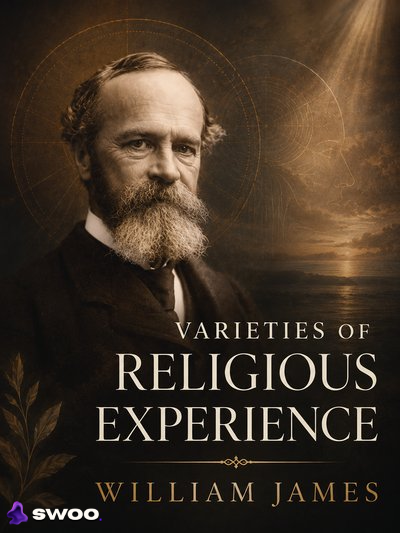
Varieties of Religious Experience
A groundbreaking psychological study of mysticism, conversion, and the religious life. James's masterwork on spirituality and the human experience.
Listen on SWOO.About this book
The Varieties of Religious Experience, published in 1902, is William James's landmark study of personal religion from a psychological perspective. Based on his Gifford Lectures, the book examines religious phenomena—conversion, mysticism, saintliness—as human experiences rather than theological doctrines.
James draws on extensive firsthand accounts, case studies, and autobiographies to explore how religion manifests in individual lives. He discusses the "religion of healthy-mindedness" versus the "sick soul," mystical states of consciousness, the value of prayer, and the psychological functions of religious belief.
Writing with characteristic openness and empathy, James treats religious experience as legitimate data for study regardless of truth claims about the supernatural. His pragmatic approach—judging religion by its fruits in human life rather than its metaphysical foundations—influenced both psychology and theology. The work remains essential reading for understanding religion, consciousness, and human psychology, combining scientific rigor with profound respect for spiritual experience.